Back to the full write-up on hijoseromero.com

GLM-5.3-Flash on 128 GB: every quant that fits, reasoning low and high

Z.ai's 320B mixture-of-experts (18B active, MIT) on a llama.cpp build of Unsloth's not-yet-merged support branch. Every Unsloth quant in size order until one no longer fits a 128 GB desktop, the same four one-shot tests each time, first at reasoning effort low, then at high. Every output, thinking transcript, partial output and number is linked.

5 of 6files fit93 to 120 GB on disk
120.4 GBbiggest that runspeak 120.5 of 123 GB usable
147.5 GBwhere it breaksfails to load
8.2 to 9.6tok/s at low, every filesize barely changes speed
12/20tests finished at low60 minute cap each
1/20tests finished at highsame files, same cap

The model

ModelGLM-5.3-Flash, by Z.ai
Parameters320B total, 18B active per token (mixture-of-experts)
Architecturehybrid sparse + linear attention, mHC hyper-connections, multi-token prediction head
Context1M tokens trained; these runs used a 65,536-token window
Reasoning levelslow, high, max (default max), plus a clear_thinking switch
LicenseMIT
Runtime herellama.cpp, Unsloth's GLM-5-Next branch build, Vulkan, flash attention off, no MTP
MachineGMKtec EVO-X2, Ryzen AI Max+ 395, 128 GB unified (123 GB usable), CachyOS

Unsloth's files, by size

UD-IQ1_S93.1 GB ran
UD-IQ1_M97.6 GB ran
UD-IQ2_XXS101.8 GB ran
UD-Q2_K_XL108.7 GB ran
UD-IQ3_XXS120.4 GB ran
UD-Q3_K_XL147.5 GB does not load
UD-IQ4_XS156.8 GB does not fit
UD-Q4_K_XL199.7 GB does not fit
BF16641.6 GB does not fit

Bars scaled to 200 GB, BF16 runs off the chart. The dashed line is 123 GB usable on this machine. Sizes from the Hugging Face API; the repo has a few more variants between 4-bit and BF16.

Not out of the box: where every dial was set

These numbers are not the defaults. The context window, the reasoning level, flash attention and MTP were all set by hand, and each one changes what the ladder measures.

DialThis pageOut of the boxWhy it matters
Context window65,536 tokens1,048,576 (the model card); llama-server's default -c 0 means "whatever the model says", so out of the box it would try to reserve a 1M-token cache. Unsloth's example command sets no size at all.set on purpose so the KV cache fits next to a 120 GB file. No test came near it: the DNF partials are about 23k tokens each, so time was the limit, never context.
Reasoning effortlow, then high; bonus leg at maxmaxchat-template argument, read at launch. Both ladders ran below the model's default.
clear_thinkingtruefalsedrops earlier thinking from the conversation; the model card recommends true for chat.
Samplerstemperature 1.0, top_p 0.95, top_k 0, min_p 0, seed 42temperature 1.0, top_p 0.95the model card's numbers; seed pinned so every file sees the same dice.
Flash attentionoff (-fa off)autothe branch needs it off for MLA precision (PR #27754). It is also why generation slows as the context fills.
Multi-token prediction (MTP)offon in Unsloth Desktop; Unsloth says the llama.cpp branch gained MTP plus faster decoding on Sep 4 ("up to 3.3x faster" at long context)this build is from Aug 28 and predates that. The binary lists --spec-type draft-mtp; not tested here. Every tok/s on this page is the no-MTP number, a rerun on the new branch is the obvious follow-up.
Time budget60 minutes per test, max_tokens 120,000nonethe cap that produced every DNF.
llama-server -m GLM-5.3-Flash-UD-IQ1_S-00001-of-00003.gguf -c 65536 -ngl 999 -np 1 --jinja -fa off \
  --chat-template-kwargs '{"reasoning_effort": "low", "clear_thinking": true}'   # then "high", then "max"

The short version

The ladder at reasoning low: one machine, the files in size order, same exam

Same prompts, same settings, same seed; only the file gets bigger. "Whole exam" = wall time for the tests that finished; "thinking" = its share of that. Peak memory = total system RAM at the run's highest point, OS included.

BuildFilePeak memory
of 123 GB usable
LoadGenerationFinishedWhole examOf which thinkingOutput tokens
1-bit S, low
UD-IQ1_S, 93.1 GB, reasoning low
93.1 GB96 GB
25 s9.4 tok/s4/425m 47s1m 24s14,266
1-bit M, low
UD-IQ1_M, 97.6 GB, reasoning low
97.6 GB111 GB
30 s8.9 tok/s1/48m 18s1m 52s4,355
2-bit XXS, low
UD-IQ2_XXS, 101.8 GB, reasoning low
101.8 GB103 GB
30 s9.1 tok/s2/414m 45s1m 00s7,924
2-bit XL, low
UD-Q2_K_XL, 108.7 GB, reasoning low
108.7 GB111 GB
30 s8.7 tok/s3/434m 34s12m 45s17,452
3-bit XXS, low
UD-IQ3_XXS, 120.4 GB, reasoning low
120.4 GB120 GB
35 s8.5 tok/s2/414m 00s1m 07s6,999
3-bit XL, low
UD-Q3_K_XL, 147.5 GB, bigger than the machine's memory
147.5 GB--
does not fit: llama-server exited during load
Qwen 3.8-Flash-Next 1-bit, medium
UD-IQ1_M, 74.5 GB, thinking medium (earlier run, same box, same prompts)
74.5 GB82 GB
20 s23.1 tok/s4/425m 21s14m 08s34,631
Qwen 3.8-27B 4-bit, medium
UD-Q4_K_XL, 17.9 GB, thinking medium (earlier run, same box, same prompts)
17.9 GB38 GB
9 s19.9 tok/s4/421m 57s7m 43s25,676

rows are the Qwen references from earlier runs (same box, same prompts): they ran with MTP on and flash attention on, so their speed is the yardstick, not a like-for-like build. Every did-not-finish is on the grid below.

The same ladder at reasoning high

BuildFilePeak memory
of 123 GB usable
LoadGenerationFinishedWhole examOf which thinkingOutput tokens
1-bit S, high
UD-IQ1_S, 93.1 GB, reasoning high
93.1 GB95 GB
25 s7.3 tok/s1/441m 53s32m 20s18,286
1-bit M, high
UD-IQ1_M, 97.6 GB, reasoning high
97.6 GB98 GB
30 s-0/4
every test hit the 60 minute cap, 4 partial outputs kept (per-test tables below)
2-bit XXS, high
UD-IQ2_XXS, 101.8 GB, reasoning high
101.8 GB102 GB
30 s-0/4
every test hit the 60 minute cap, 4 partial outputs kept (per-test tables below)
2-bit XL, high
UD-Q2_K_XL, 108.7 GB, reasoning high
108.7 GB109 GB
30 s-0/4
every test hit the 60 minute cap, 4 partial outputs kept (per-test tables below)
3-bit XXS, high
UD-IQ3_XXS, 120.4 GB, reasoning high
120.4 GB119 GB
35 s-0/4
every test hit the 60 minute cap, 4 partial outputs kept (per-test tables below)
3-bit XL, high
UD-Q3_K_XL, 147.5 GB, bigger than the machine's memory
147.5 GB--
does not fit: llama-server exited during load

Same files, same prompts, same seed, only the reasoning dial moved from low to high. 60-minute cap per test.

Bonus: reasoning max on the smallest file

GLM-5.3-Flash has three reasoning levels, low, high and max, and max is the model's default. The ladder skipped it because at 9 tok/s nothing would finish inside the hour. This is what happens when you leave the dial where Z.ai set it, on the 93 GB file: first with the ladder's 60-minute cap and 65k context, then with a 3-hour cap per test and a 262k context.

BuildFilePeak memory
of 123 GB usable
LoadGenerationFinishedWhole examOf which thinkingOutput tokens
1-bit S, max
UD-IQ1_S, 93.1 GB, reasoning max (the model's default)
93.1 GB101 GB
25 s-0/4
every test hit the 60 minute cap, 4 partial outputs kept (per-test tables below)
1-bit S, max, 3 h cap
UD-IQ1_S, 93.1 GB, reasoning max, 180 min per test, 262k context
93.1 GB105 GB
25 s-0/4
every test hit the 180 minute cap, 4 partial outputs kept (per-test tables below)

The 1-bit S at reasoning_effort max, the setting the model ships with. First with the ladder's 60 minute cap and 65k context, then with a 3 hour cap per test and a 262k context (131k if the bigger one fails to load).

GLM speed = llama-server's generation timing. Machine and runtime details are in the model card at the top.

How this ran before llama.cpp supports it

The problem, still

GLM-5.3-Flash uses a brand-new architecture (glm5next: hybrid linear + sparse attention, 288 routed experts, "hyper-connections"). Stock llama.cpp master still refuses the file: unknown model architecture: 'glm5next'. The working support is Unsloth's llama.cpp PR #27754, "model: add GLM-5-Next (GLM-5.3-Flash)", branch glm5next/upstream on Unsloth's fork. It requires flash attention off (-fa off), and MTP is in the file but the branch does not use it yet. Everything here ran on Vulkan (RADV) on a Strix Halo desktop.

The recipe

Same box as the Qwen runs: GMKtec EVO-X2, Ryzen AI Max+ 395, 128 GB unified memory (123 GB usable), Radeon 8060S, CachyOS. Branch build in its own folder; stock master untouched.

1. Build the branch with Vulkan.

git clone --branch glm5next/upstream --depth 1 https://github.com/unslothai/llama.cpp llama.cpp-glm5next
cd llama.cpp-glm5next
cmake -B build -DGGML_VULKAN=ON -DCMAKE_BUILD_TYPE=Release
cmake --build build --config Release -j $(nproc) --target llama-server

2. Download the quants in size order. From unsloth/GLM-5.3-Flash-GGUF. The full list, smallest first: UD-IQ1_S 93.1 GB, UD-IQ1_M 97.6, UD-IQ2_XXS 101.8, UD-Q2_K_XL 108.7, UD-IQ3_XXS 120.4, UD-Q3_K_XL 147.5, UD-IQ4_XS 156.8, UD-Q4_K_XL 199.7, then Q5, Q6, Q8 and BF16 (642 GB). Unsloth's own table says 1-bit needs 100 GB, 2-bit 115, 3-bit 128 to 150. With 123 GB usable the ladder was: every file in size order through the 3-bit XL, and stop at the first one that does not fit. The Q3_K_XL (147.5 GB) is bigger than the machine's memory, so it cannot be resident; it went through the same gate anyway so the break is measured, not assumed.

hf download unsloth/GLM-5.3-Flash-GGUF --include "UD-IQ1_S/*"
hf download unsloth/GLM-5.3-Flash-GGUF --include "UD-IQ1_M/*"
hf download unsloth/GLM-5.3-Flash-GGUF --include "UD-IQ2_XXS/*"
hf download unsloth/GLM-5.3-Flash-GGUF --include "UD-Q2_K_XL/*"
hf download unsloth/GLM-5.3-Flash-GGUF --include "UD-IQ3_XXS/*"
hf download unsloth/GLM-5.3-Flash-GGUF --include "UD-Q3_K_XL/*"

3. One server per file, the same exam. 65k context, flash attention off, reasoning effort set at launch (the branch reads it from the chat template), model-card samplers: temperature 1.0, top_p 0.95. Four prompts, one shot each, seed 42, 60 minutes per test, then the server is stopped and the next file loads. The runner records wall time, generation and prefill speed from llama-server's own timings, output tokens, thinking share, peak system memory, load time.

build/bin/llama-server -m <first shard>.gguf --host 127.0.0.1 --port 8899 -np 1 -c 65536 -ngl 999 \
  --jinja --no-webui -fa off --chat-template-kwargs '{"reasoning_effort":"low","clear_thinking":true}'

The high ladder is the same command with "reasoning_effort":"high".

4. The does-not-fit gate. A file that is larger than free memory does not fail cleanly on this box: llama.cpp maps it from disk and the model "runs" at a token every few seconds while the kernel pages weights in and out. To keep that from eating four hours of time limits, the runner sends an 8-token warmup ping first; if it does not come back within 5 minutes the leg is recorded as does-not-fit and the next file loads. Legs that hit that gate are listed under Errors with the exact message.

What the server log says about Vulkan. On every layer the branch prints fused DeepSeek V4 HC pre/comb/post not supported, set to disabled: the hyper-connection ops have no fused Vulkan kernel yet and take the slow path. The speeds on this page are a first-week floor for this backend, not the model's ceiling.

Test results

Per test: a mid-play frame of every build that finished (click to open the file the model wrote), and the numbers.

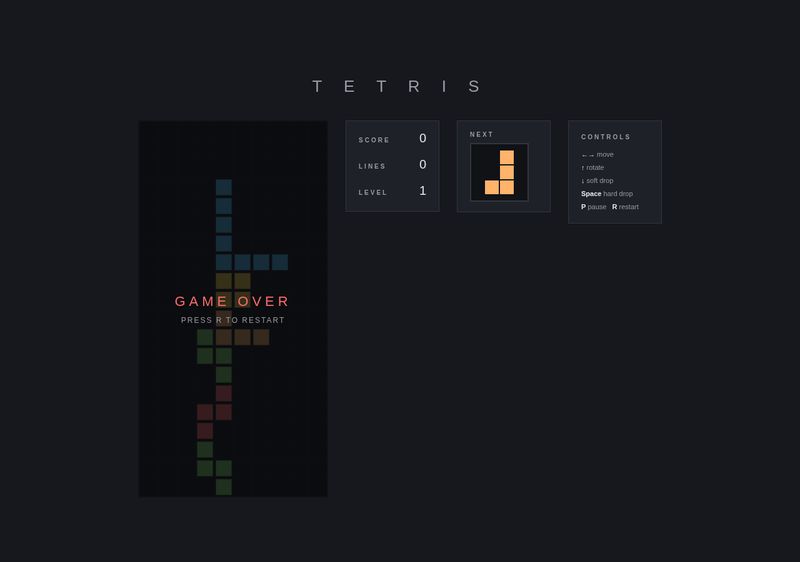
BLOCKFALL a complete falling-blocks game, one prompt

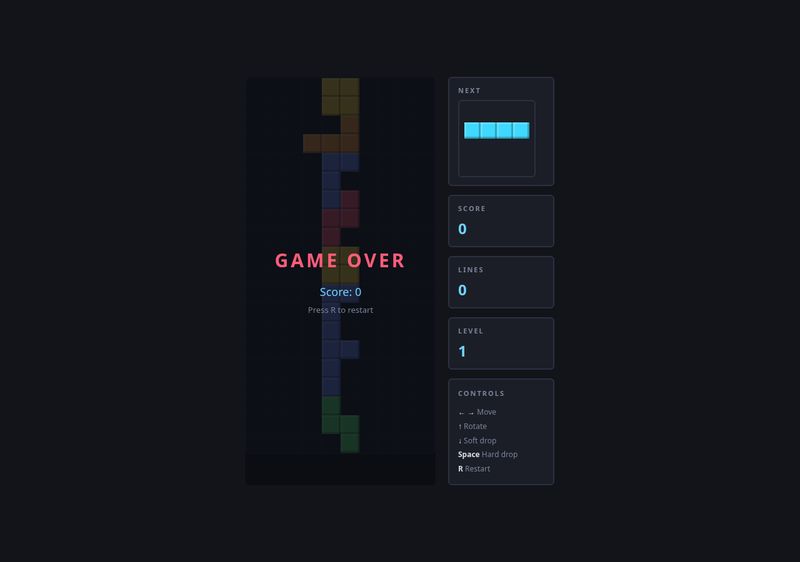
Browser check: two finishers at reasoning low (1-bit S, 2-bit XL), both reach game over with zero console errors; the other three files hit the hour while still drafting inside their thinking
1-bit S, low BLOCKFALL
1-bit S, low: game over reached; score 0; ghost piece; 0 console errors
2-bit XL, low BLOCKFALL
2-bit XL, low: game over reached; score 0; 0 console errors
BuildTotal timeThinkingOutputGen speedHTML sizeFiles
1-bit S, low5m 22s- (0%)3,0379.6 tok/s8 KBoutput · raw
1-bit M, lowDNF 60 min cap----no partial kept
2-bit XXS, lowDNF 60 min cap----no partial kept
2-bit XL, low5m 37s0m 01s (0%)3,0749.2 tok/s8 KBoutput · thinking · raw
3-bit XXS, lowDNF 60 min cap77,180 chars0 answer chars--partial output
3-bit XL, lowdid not fit bigger than the machine's memory, llama-server exited during load
1-bit S, highDNF 60 min cap84,418 chars0 answer chars--partial output
1-bit M, highDNF 60 min cap81,974 chars0 answer chars--partial output
2-bit XXS, highDNF 60 min cap82,877 chars0 answer chars--partial output
2-bit XL, highDNF 60 min cap69,095 chars13,393 answer chars--partial output
3-bit XXS, highDNF 60 min cap63,743 chars14,460 answer chars--partial output
3-bit XL, highdid not fit bigger than the machine's memory, llama-server exited during load
1-bit S, maxDNF 60 min cap86,603 chars0 answer chars--partial output
1-bit S, max, 3 h capDNF 180 min cap233,711 chars0 answer chars--partial output

Two finishers at low: the 1-bit S (5.4 min, 3,037 tokens: five keys, ghost piece, next preview, game over, zero errors) and the 2-bit XL (5.6 min, 3,074 tokens, same minus the ghost piece). The 1-bit M, 2-bit XXS and 3-bit XXS all hit the hour. The 3-bit XXS partial shows why: a full requirements checklist, then the complete game (CSS, canvas, lock delay, sound) written inside the thinking, no answer started. The two files that finished skipped that step (0% thinking share) and wrote the game once.

The exact prompt (one shot, sent as-is)
Create a complete falling-blocks puzzle game in a single self-contained HTML file. No external libraries, no internet resources, no images: everything inline (HTML, CSS, JavaScript, canvas rendering).

Requirements:

- 10 wide by 20 tall playfield rendered on a canvas.
- Seven distinct piece shapes, each made of four squares, each with its own color.
- Controls: left/right arrows move, up arrow rotates, down arrow soft-drops, spacebar hard-drops.
- Rotation must respect walls and stacked blocks (no clipping through anything).
- Completed horizontal lines clear, rows above fall down, and clearing multiple lines at once scores more.
- Score, lines cleared, and level displayed. Speed increases with level.
- Next-piece preview box.
- Game over when the stack reaches the top, with a visible game-over state and a restart key.
- Clean, readable dark visual style.

Output only the complete HTML file.
open as plain text ↗
ERUPTION a volcano physics simulation with live controls

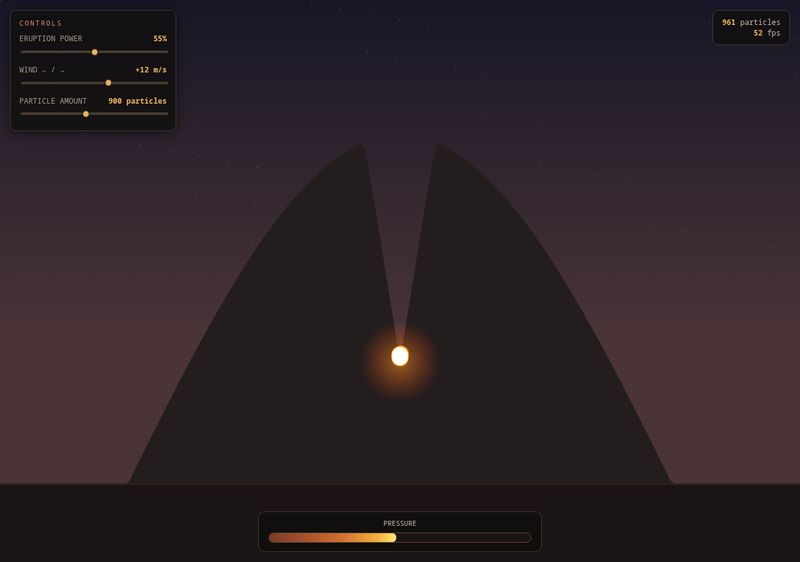
Browser check: one finisher at reasoning low (1-bit S: 900 particles at 10 s, zero errors); every other file hit the hour, the 3-bit XXS 12,000 characters into its answer

1-bit S, low ERUPTION
1-bit S, low: 900 particles on screen at 10 s; 50 fps; 0 console errors
BuildTotal timeThinkingOutputGen speedHTML sizeFiles
1-bit S, low8m 04s0m 04s (0%)4,4269.2 tok/s10 KBoutput · thinking · raw
1-bit M, lowDNF 60 min cap----no partial kept
2-bit XXS, lowDNF 60 min cap----no partial kept
2-bit XL, lowDNF 60 min cap----no partial kept
3-bit XXS, lowDNF 60 min cap62,462 chars12,045 answer chars--partial output
3-bit XL, lowdid not fit bigger than the machine's memory, llama-server exited during load
1-bit S, highDNF 60 min cap81,274 chars0 answer chars--partial output
1-bit M, highDNF 60 min cap95,539 chars0 answer chars--partial output
2-bit XXS, highDNF 60 min cap82,201 chars0 answer chars--partial output
2-bit XL, highDNF 60 min cap85,787 chars0 answer chars--partial output
3-bit XXS, highDNF 60 min cap78,082 chars0 answer chars--partial output
3-bit XL, highdid not fit bigger than the machine's memory, llama-server exited during load
1-bit S, maxDNF 60 min cap92,648 chars0 answer chars--partial output
1-bit S, max, 3 h capDNF 180 min cap235,760 chars0 answer chars--partial output

One finisher at low: the 1-bit S (8.1 min, 900 particles at 10 s, live controls, zero errors). Every other file ran into the hour; the 2-bit XL did it twice, at 240 minutes on its first night and at 60 on the second. The 3-bit XXS partial: 62,000 characters of thinking, then 12,000 characters of a real answer cut off mid-file. Eruption is the test this model drafts longest on.

The exact prompt (one shot, sent as-is)
Create a 2D physics simulation of a volcano erupting, in a single self-contained HTML file. No external libraries: everything inline, rendered on a canvas.

Requirements:

- Side view: a volcano cone with a crater, ground, and sky.
- A pressure meter that builds over time; when it maxes out, the volcano erupts, then pressure resets and builds again on its own.
- Eruptions launch glowing lava particles from the crater with varied velocities. Particles follow gravity in a realistic arc, land on the slopes, and slide or settle downhill.
- Lava cools over its lifetime: bright yellow-orange when launched, fading to dark rock, then disappearing.
- An ash cloud of smoke particles that rises from the crater and drifts with the wind.
- Three sliders the user can move while it runs: eruption power, wind strength and direction, and particle amount.
- A live on-screen counter showing active particle count and frames per second. The simulation must stay smooth with at least 1000 active particles.

Output only the complete HTML file.
open as plain text ↗
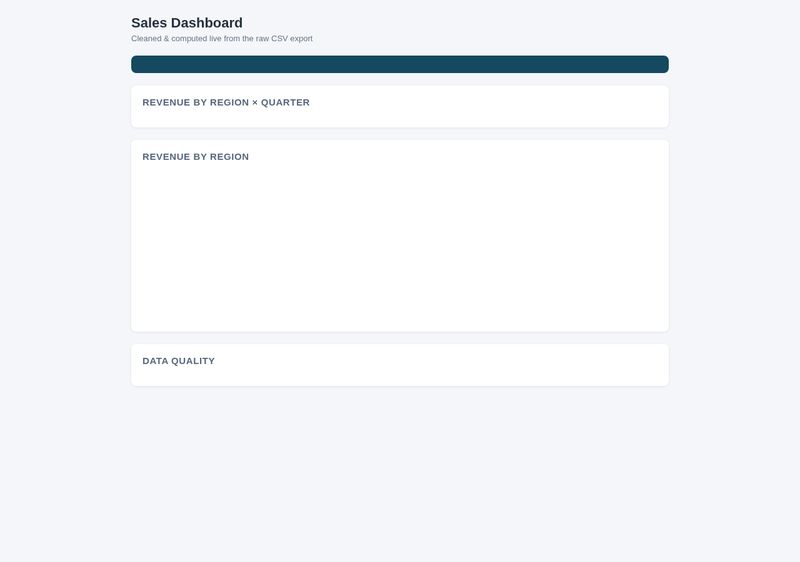
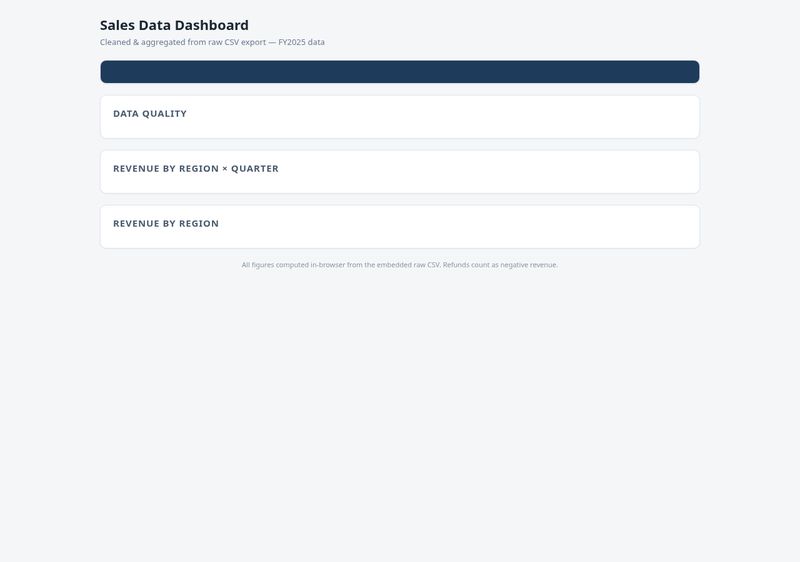
THE LEDGER clean a messy CSV and build a correct dashboard

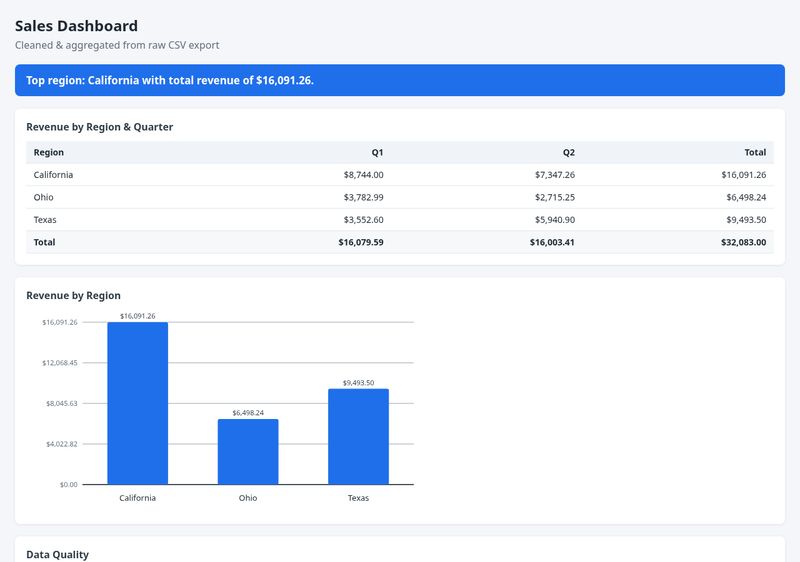
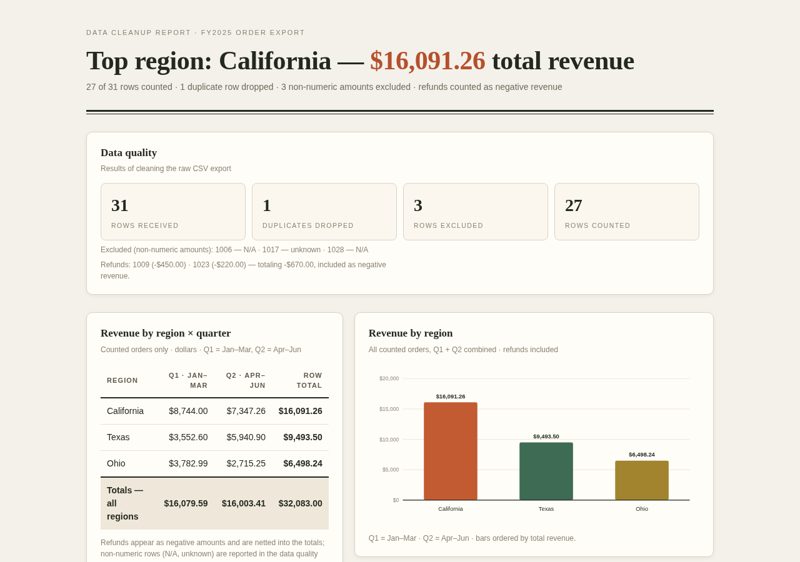
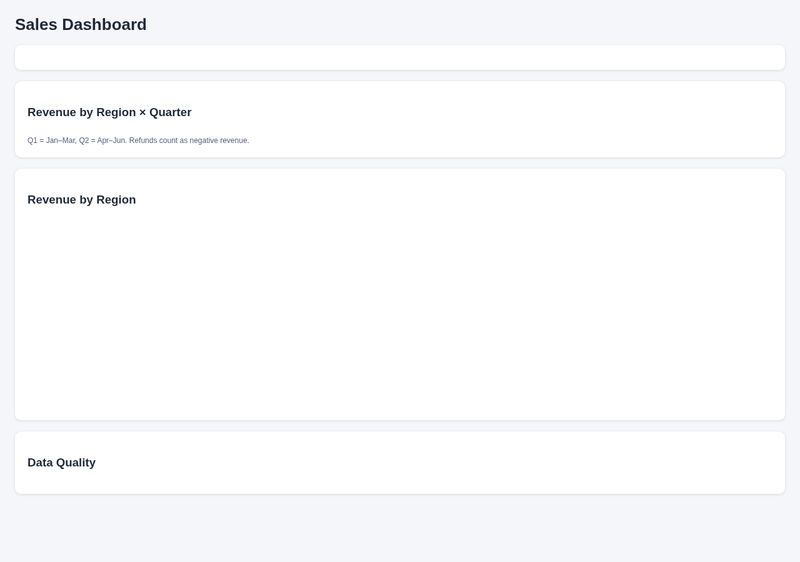
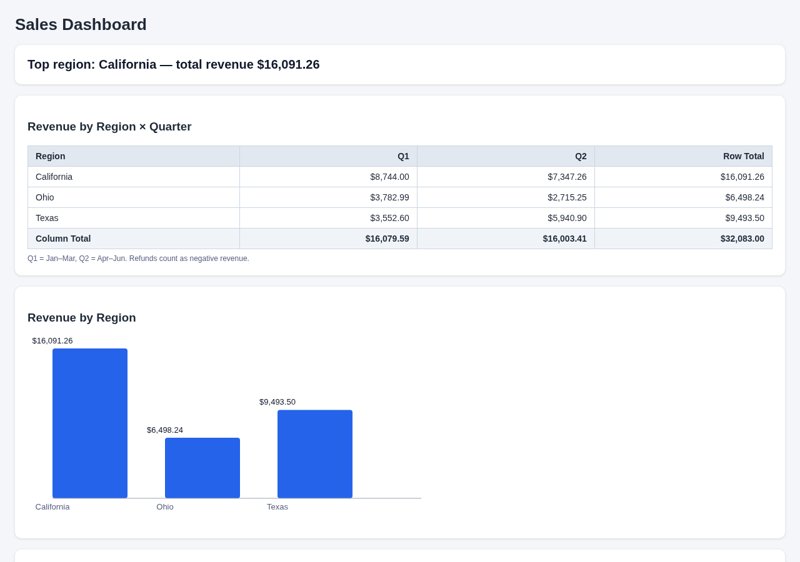
Browser check: 2-bit XL and 3-bit XXS render all six key numbers exact with zero errors; 1-bit S, 1-bit M and 2-bit XXS render blank because of a single-token script error each (numbers correct in the source; hand-fixed renders shown)

1-bit S, low THE LEDGER
1-bit S, low: only 0/6 key numbers found (check by hand); duplicate id not mentioned; 1 console/page error(s): page: Identifier 'top' has already been declared
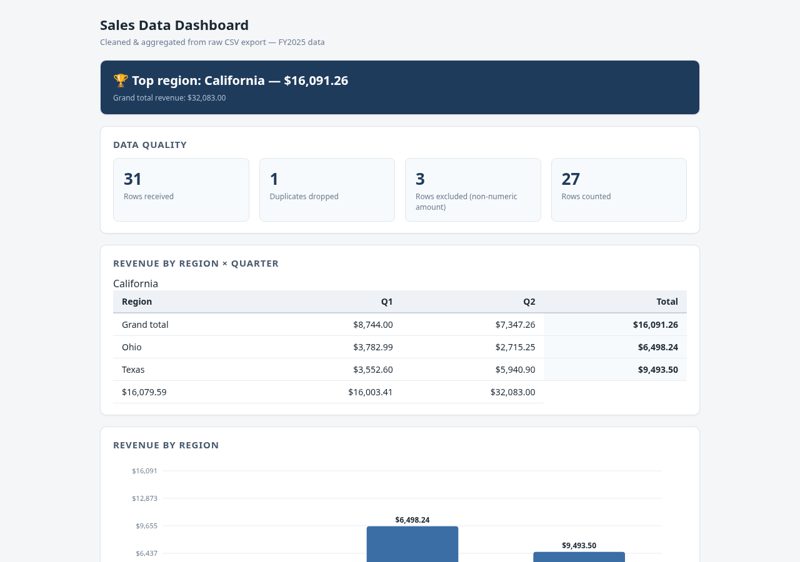
1-bit S, low THE LEDGER, fixed by hand
1-bit S, low, fixed by hand: one identifier renamed (top to topRegion, it collided with the browser's built-in window.top); all 6 key numbers exact, 0 console errors. This is what an agent harness would have shipped after reading the console.
1-bit M, low THE LEDGER
1-bit M, low: only 0/6 key numbers found (check by hand); duplicate id not mentioned; 1 console/page error(s): page: Identifier 'top' has already been declared
2-bit XXS, low THE LEDGER
2-bit XXS, low: only 0/6 key numbers found (check by hand); duplicate id not mentioned; 1 console/page error(s): page: Unexpected token '.'
2-bit XXS, low THE LEDGER, fixed by hand
2-bit XXS, low, fixed by hand: one entry deleted from an object literal ('texas '.trim().toLowerCase():'Texas', an expression is not a valid key without brackets, so the whole script failed to parse); all 6 key numbers exact, duplicate flagged, 0 console errors. This is what an agent harness would have shipped after reading the console.
2-bit XL, low THE LEDGER
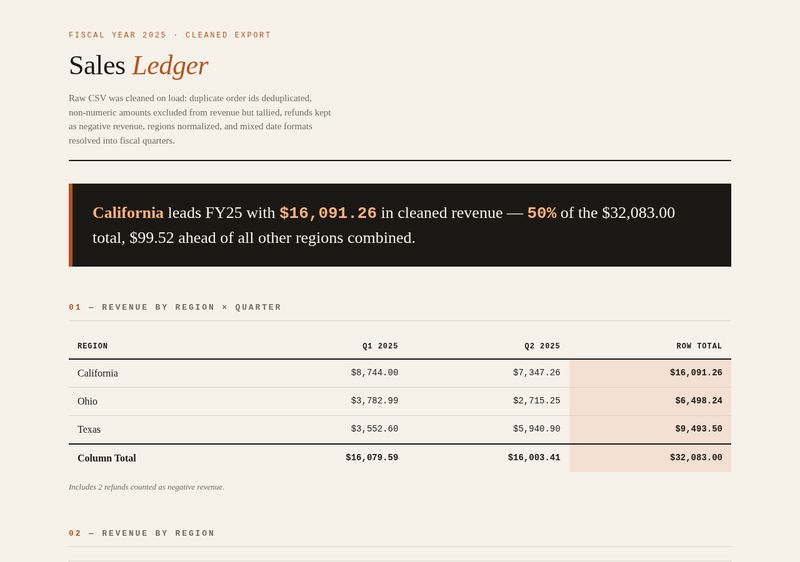
2-bit XL, low: all 6 key numbers exact; 0 console errors
3-bit XXS, low THE LEDGER
3-bit XXS, low: all 6 key numbers exact; duplicate id not mentioned; 0 console errors
1-bit S, high THE LEDGER
1-bit S, high: only 0/6 key numbers found (check by hand); duplicate id not mentioned; 1 console/page error(s): page: Identifier 'top' has already been declared
1-bit S, high THE LEDGER, fixed by hand
1-bit S, high, fixed by hand: the same one-token slip as the low run, 18,000 tokens later: top renamed to topRegion (two lines); all 6 key numbers exact, 0 console errors. This is what an agent harness would have shipped after reading the console.
BuildTotal timeThinkingOutputGen speedHTML sizeFiles
1-bit S, low5m 20s0m 17s (5%)2,8949.4 tok/s7 KBoutput · thinking · raw
1-bit M, low8m 18s1m 52s (22%)4,3558.9 tok/s8 KBoutput · thinking · raw
2-bit XXS, low7m 21s0m 55s (12%)3,8639.0 tok/s8 KBoutput · thinking · raw
2-bit XL, low10m 11s0m 53s (8%)5,1938.6 tok/s14 KBoutput · thinking · raw
3-bit XXS, low7m 56s0m 52s (11%)3,8848.3 tok/s8 KBoutput · thinking · raw
3-bit XL, lowdid not fit bigger than the machine's memory, llama-server exited during load
1-bit S, high41m 53s32m 20s (77%)18,2867.3 tok/s12 KBoutput · thinking · raw
1-bit M, highDNF 60 min cap46,741 chars45,159 answer chars--partial output
2-bit XXS, highDNF 60 min cap57,722 chars28,979 answer chars--partial output
2-bit XL, highDNF 60 min cap55,959 chars23,491 answer chars--partial output
3-bit XXS, highDNF 60 min cap88,665 chars0 answer chars--partial output
3-bit XL, highdid not fit bigger than the machine's memory, llama-server exited during load
1-bit S, maxDNF 60 min cap88,267 chars0 answer chars--partial output
1-bit S, max, 3 h capDNF 180 min cap230,161 chars0 answer chars--partial output

The one test with a provable answer, and the one that separates the files. 2-bit XL (10.2 min) and 3-bit XXS (7.9 min): all six numbers exact (California 16,091.26, Ohio 6,498.24, Texas 9,493.50, quarter totals 16,079.59 and 16,003.41, grand total 32,083.00), refunds negative, duplicate dropped, headline that reads like a person wrote it, zero console errors. 1-bit S and 1-bit M: blank page, let top at global scope collides with the browser's built-in window.top; the numbers are right in the source. 2-bit XXS: blank page, the region map has 'texas '.trim().toLowerCase() as an object key, which is not valid JavaScript without brackets, so nothing runs. Both fixes are one token; the fixed renders are next to the broken frames, every number exact. A one-shot prompt does not get that second look; an agent harness does.

The exact prompt (one shot, sent as-is)
Below is a messy sales CSV export. Build a single self-contained HTML dashboard file (no external libraries, everything inline) that cleans this data and reports on it.

Cleaning rules:

- order_id must be unique: if an id appears twice, keep the first row and drop the rest.
- Rows whose amount is not a number (like N/A or unknown) are excluded from revenue, but report how many you excluded.
- Negative amounts are refunds and must count as negative revenue.
- Region names must be normalized (TX, tx, Texas, texas are all Texas; CA is California; OH is Ohio).
- Dates appear in multiple formats; parse them all. Q1 = Jan-Mar, Q2 = Apr-Jun.

The dashboard must show:

1. A pivot table of total revenue by region (rows) and quarter (columns), with row totals, column totals, and a grand total, formatted as dollars with two decimals.
2. A bar chart of revenue by region drawn with inline SVG or canvas (no chart libraries).
3. A data quality panel: rows received, duplicates dropped, rows excluded, rows counted.
4. A one-line headline stating the top region and its total.

The numbers displayed must be computed correctly from the data. Output only the complete HTML file.

```
order_id,order_date,region,product,amount_usd
1001,2025-01-06,Texas,widget,"1,240.00"
1002,1/9/2025,CA,gadget,$980
1003,2025-01-14,TX,gizmo,312.50
1004,"Jan 21, 2025",california,widget,"1,764.00"
1005,2025-01-27,Ohio,gadget,455
1006,2/3/2025,texas ,widget,N/A
1007,2025-02-10,OH,gizmo,"1,102.25"
1008,"Feb 14, 2025",California,widget,"2,310.00"
1009,2025-02-18,TX,gadget,-450.00
1010,2025-02-24,Texas,gizmo,870.10
1011,3/3/2025,Ohio,widget,"$1,999.99"
1012,2025-03-08,CA,gizmo,640.00
1008,"Feb 14, 2025",California,widget,"2,310.00"
1013,"Mar 12, 2025",tx,gadget,"1,580.00"
1014,2025-03-19,ohio,gizmo,225.75
1015,2025-03-27,California,gadget,"3,050.00"
1016,4/2/2025,TX,widget,990.00
1017,2025-04-07,Ohio,gadget,unknown
1018,"Apr 11, 2025",CA,widget,"1,420.50"
1019,2025-04-16,Texas,gizmo,"2,075.00"
1020,2025-04-22,OH,widget,$760.25
1021,5/1/2025,California,gizmo,"1,111.11"
1022,2025-05-06,TX,gadget,845.00
1023,"May 13, 2025",Ohio,gizmo,-220.00
1024,2025-05-19,texas,widget,"1,300.00"
1025,2025-05-28,CA,gadget,"2,940.40"
1026,6/4/2025,Ohio,widget,515.00
1027,2025-06-10,California,widget,"1,875.25"
1028,"Jun 17, 2025",TX,gizmo,N/A
1029,2025-06-23,OH,gadget,"1,660.00"
1030,2025-06-30,Texas,gadget,730.90
```
open as plain text ↗

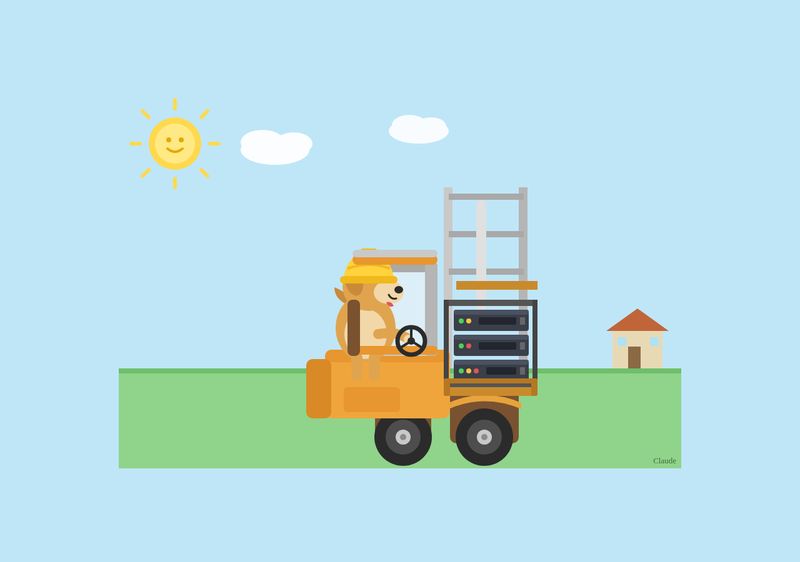
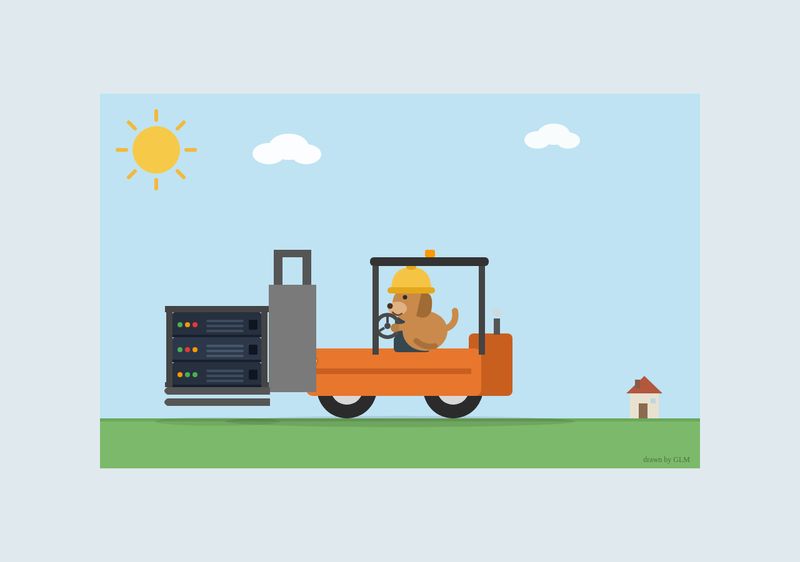
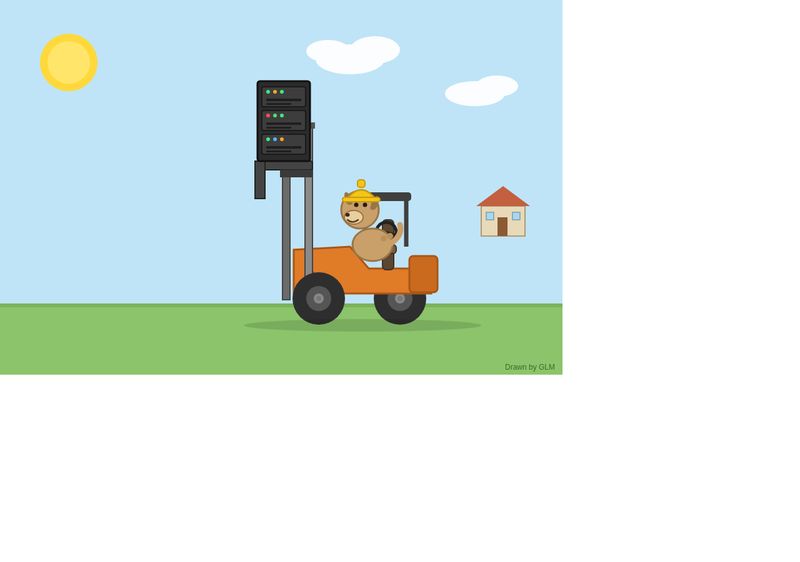
BLIND ARTIST draw a scene in pure SVG, no eyes allowed

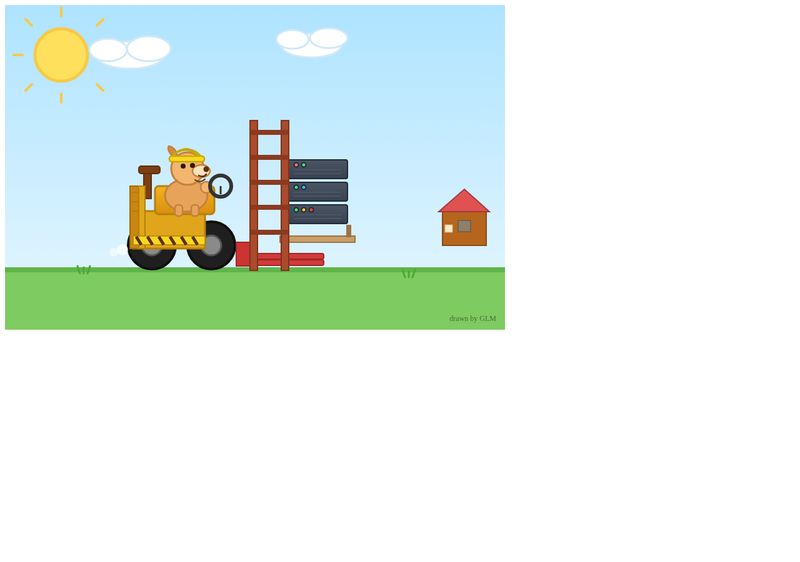
Browser check: four valid SVGs, zero errors, servers on the forks and a dog in a hard hat every time; signed 'drawn by GLM' three times and 'Claude' once (2-bit XXS)

1-bit S, low BLIND ARTIST
1-bit S, low: signed "drawn by GLM"; valid SVG; 0 console errors
2-bit XXS, low BLIND ARTIST
2-bit XXS, low: signed "Claude"; valid SVG; 0 console errors
2-bit XL, low BLIND ARTIST
2-bit XL, low: signed "drawn by GLM"; valid SVG; 0 console errors
3-bit XXS, low BLIND ARTIST
3-bit XXS, low: signed "Drawn by GLM"; valid SVG; 0 console errors
BuildTotal timeThinkingOutputGen speedHTML sizeFiles
1-bit S, low7m 01s1m 03s (15%)3,9099.4 tok/s8 KBoutput · thinking · raw
1-bit M, lowDNF 60 min cap----no partial kept
2-bit XXS, low7m 24s0m 05s (1%)4,0619.2 tok/s9 KBoutput · thinking · raw
2-bit XL, low18m 46s11m 51s (63%)9,1858.2 tok/s7 KBoutput · thinking · raw
3-bit XXS, low6m 05s0m 15s (4%)3,1158.6 tok/s7 KBoutput · thinking · raw
3-bit XL, lowdid not fit bigger than the machine's memory, llama-server exited during load
1-bit S, highDNF 60 min cap75,546 chars0 answer chars--partial output
1-bit M, highDNF 60 min cap88,586 chars0 answer chars--partial output
2-bit XXS, highDNF 60 min cap84,936 chars0 answer chars--partial output
2-bit XL, highDNF 60 min cap71,042 chars0 answer chars--partial output
3-bit XXS, highDNF 60 min cap84,663 chars0 answer chars--partial output
3-bit XL, highdid not fit bigger than the machine's memory, llama-server exited during load
1-bit S, maxDNF 60 min cap81,839 chars0 answer chars--partial output
1-bit S, max, 3 h capDNF 180 min cap224,279 chars0 answer chars--partial output

Four finished drawings, all valid SVG, zero errors, all with the servers on the forks, a dog driving in a hard hat, sun, clouds, house. 1-bit S (7.0 min): a ladder, a cartoon dog with goggles, "drawn by GLM". 2-bit XXS (7.4 min): the cleanest forklift of the set, three servers with LEDs, a stacked ladder, a smiling sun, signed "Claude". 2-bit XL (18.8 min, 63% of it thinking): flat illustration style, orange forklift, "drawn by GLM". 3-bit XXS (6.1 min): tall mast, three servers, a bear-like dog, "Drawn by GLM". The 1-bit M ran into the hour.

The exact prompt (one shot, sent as-is)
Using only raw inline SVG code (no JavaScript, no external images, no libraries), draw this exact scene as a single self-contained HTML file:

A happy dog wearing a yellow hard hat is driving a forklift. The forklift is lifting a rack of three stacked computer servers on its front forks. The servers have small colored indicator lights. The scene is outdoors: flat ground, a sun in the top left, two clouds, and a small house far in the background on the right. The forklift has two wheels touching the ground and the dog sits in the driver seat holding the steering wheel.

Layering must be correct (wheels touch the ground, the dog is inside the forklift, the hat is on the dog's head, the servers sit on the forks). Sign the artwork by writing your own model name in small text in the bottom right corner.
open as plain text ↗
How the browser check was done

Each finished output opened in headless Chromium, console captured. Blockfall: all keys pressed, then 60 hard drops. Eruption: 10.5 s wait, counters read. Ledger: the six key numbers searched in the rendered page. Blind Artist: SVG validity and signature text. The screenshots on this page are those frames. Did-not-finish legs have no output file, so they have no screenshot; from the 3-bit legs on, the text generated before the cap is linked as "partial output".

Every run on one grid: finished, did not finish, did not fit

BuildBlockfallEruptionThe LedgerBlind ArtistFinished
Reasoning low
1-bit S, low
93.1 GB
5m 22s9.6 tok/s · 3,037 tok · output8m 04s9.2 tok/s · 4,426 tok · output5m 20s9.4 tok/s · 2,894 tok · output7m 01s9.4 tok/s · 3,909 tok · output4/4
1-bit M, low
97.6 GB
DNFno partialDNFno partial8m 18s8.9 tok/s · 4,355 tok · outputDNFno partial1/4
2-bit XXS, low
101.8 GB
DNFno partialDNFno partial7m 21s9.0 tok/s · 3,863 tok · output7m 24s9.2 tok/s · 4,061 tok · output2/4
2-bit XL, low
108.7 GB
5m 37s9.2 tok/s · 3,074 tok · outputDNFno partial10m 11s8.6 tok/s · 5,193 tok · output18m 46s8.2 tok/s · 9,185 tok · output3/4
3-bit XXS, low
120.4 GB
DNF77k thinking · 0k answer · partialDNF62k thinking · 12k answer · partial7m 56s8.3 tok/s · 3,884 tok · output6m 05s8.6 tok/s · 3,115 tok · output2/4
3-bit XL, low
147.5 GB
did not fitbigger than the machine's memory, llama-server exited during load
Reasoning high
1-bit S, high
93.1 GB
DNF84k thinking · 0k answer · partialDNF81k thinking · 0k answer · partial41m 53s7.3 tok/s · 18,286 tok · outputDNF75k thinking · 0k answer · partial1/4
1-bit M, high
97.6 GB
DNF81k thinking · 0k answer · partialDNF95k thinking · 0k answer · partialDNF46k thinking · 45k answer · partialDNF88k thinking · 0k answer · partial0/4
2-bit XXS, high
101.8 GB
DNF82k thinking · 0k answer · partialDNF82k thinking · 0k answer · partialDNF57k thinking · 28k answer · partialDNF84k thinking · 0k answer · partial0/4
2-bit XL, high
108.7 GB
DNF69k thinking · 13k answer · partialDNF85k thinking · 0k answer · partialDNF55k thinking · 23k answer · partialDNF71k thinking · 0k answer · partial0/4
3-bit XXS, high
120.4 GB
DNF63k thinking · 14k answer · partialDNF78k thinking · 0k answer · partialDNF88k thinking · 0k answer · partialDNF84k thinking · 0k answer · partial0/4
3-bit XL, high
147.5 GB
did not fitbigger than the machine's memory, llama-server exited during load
Bonus: reasoning max, smallest file
1-bit S, max
93.1 GB
DNF86k thinking · 0k answer · partialDNF92k thinking · 0k answer · partialDNF88k thinking · 0k answer · partialDNF81k thinking · 0k answer · partial0/4
1-bit S, max, 3 h cap
93.1 GB
DNF233k thinking · 0k answer · partialDNF235k thinking · 0k answer · partialDNF230k thinking · 0k answer · partialDNF224k thinking · 0k answer · partial0/4

time finished, wall time · DNF hit the time cap (60 minutes on the ladder, 180 on the 3-hour bonus rows), the text written so far is the partial (thinking and answer characters) · did not fit llama-server could not load the file. Every cell links the model's raw file.

Raw model outputs

Per build: the numbers file, and for each test the output the model wrote, its thinking transcript, the raw response, and the partial where the cap hit.

BuildFiles
1-bit S, lowresults.json · 01-blockfall.html · 01-blockfall.raw.txt · 03-eruption.html · 03-eruption.thinking.txt · 03-eruption.raw.txt · 04-the-ledger.html · 04-the-ledger.thinking.txt · 04-the-ledger.raw.txt · 05-blind-artist.html · 05-blind-artist.thinking.txt · 05-blind-artist.raw.txt
1-bit M, lowresults.json · 04-the-ledger.html · 04-the-ledger.thinking.txt · 04-the-ledger.raw.txt
2-bit XXS, lowresults.json · 04-the-ledger.html · 04-the-ledger.thinking.txt · 04-the-ledger.raw.txt · 05-blind-artist.html · 05-blind-artist.thinking.txt · 05-blind-artist.raw.txt
2-bit XL, lowresults.json · 01-blockfall.html · 01-blockfall.thinking.txt · 01-blockfall.raw.txt · 04-the-ledger.html · 04-the-ledger.thinking.txt · 04-the-ledger.raw.txt · 05-blind-artist.html · 05-blind-artist.thinking.txt · 05-blind-artist.raw.txt
3-bit XXS, lowresults.json · 01-blockfall.partial.txt · 03-eruption.partial.txt · 04-the-ledger.html · 04-the-ledger.thinking.txt · 04-the-ledger.raw.txt · 05-blind-artist.html · 05-blind-artist.thinking.txt · 05-blind-artist.raw.txt
3-bit XL, lowresults.json
1-bit S, highresults.json · 01-blockfall.partial.txt · 03-eruption.partial.txt · 04-the-ledger.html · 04-the-ledger.thinking.txt · 04-the-ledger.raw.txt · 05-blind-artist.partial.txt
1-bit M, highresults.json · 01-blockfall.partial.txt · 03-eruption.partial.txt · 04-the-ledger.partial.txt · 05-blind-artist.partial.txt
2-bit XXS, highresults.json · 01-blockfall.partial.txt · 03-eruption.partial.txt · 04-the-ledger.partial.txt · 05-blind-artist.partial.txt
2-bit XL, highresults.json · 01-blockfall.partial.txt · 03-eruption.partial.txt · 04-the-ledger.partial.txt · 05-blind-artist.partial.txt
3-bit XXS, highresults.json · 01-blockfall.partial.txt · 03-eruption.partial.txt · 04-the-ledger.partial.txt · 05-blind-artist.partial.txt
3-bit XL, highresults.json
1-bit S, maxresults.json · 01-blockfall.partial.txt · 03-eruption.partial.txt · 04-the-ledger.partial.txt · 05-blind-artist.partial.txt
1-bit S, max, 3 h capresults.json · 01-blockfall.partial.txt · 03-eruption.partial.txt · 04-the-ledger.partial.txt · 05-blind-artist.partial.txt

Sources

Claim on this pageDirect source
Model facts (320B total, 18B active, hybrid sparse + linear attention, mHC, 1M context, MIT), samplers, reasoning_effort levels GLM-5.3-Flash model card
The files that ran, their sizes, Unsloth's memory table Unsloth guide · the GGUF repo
Why a branch build was needed, flash attention off, MTP unused llama.cpp PR #27754, "model: add GLM-5-Next (GLM-5.3-Flash)"
The first night on the smallest file (the page this one extends) GLM-5.3-Flash, the smallest quant
The Qwen reference rows (same tests, same box) Qwen 3.8-Flash-Next results page · the thinking-dial results page

These are affiliate links. If you buy through them I may earn a small commission at no extra cost to you. As an Amazon Associate I earn from qualifying purchases.